Dear Members,
Although you’d be forgiven for thinking the winter will never end, our thoughts are turning to the new spring/summer playing season and what work is needed on the courses – greens in particular – to prepare them for it.
We performed a greater degree of maintenance work on the greens in the 2022 season so that we could avoid performing any in 2023 with Garden closed. It was a strategy that worked and got us through to this point with eighteen holes open throughout the year. However, the benefit of that extra work is far behind us, routine maintenance is needed this spring, and we cannot afford to continue the suspension of maintenance activity. I would love to keep the suspension of maintenance work going until summer but that isn’t possible.
A wet year produces greater growth and therefore thatch/organic matter requiring removal and/or dilution with sand to maintain surface performance. The exceptional rainfall received in 2023 of 856mm (667mm average), unusually high during the autumn period, has increased the amount of this performance-killing material, which is to be expected. Greens with excess thatch become soft, bumpy, poorly draining, disease prone, and slow if corrective action isn’t taken.
We must complete maintenance work to the greens this spring to reverse the effects of thatch and this blog outlines the plan of attack and what to expect. If this maintenance work is not performed ahead of the new playing season, then we stand to not meet performance expectations and that of course is highly undesirable.
Three weeks have been identified in the club calendar in which we’ll complete the work, and these are as follows:
- Week commencing 29th January
- Week commencing 12th February
- Week commencing 18th March
Given the high likelihood of poor weather during the early spring period, I thought it wise to reserve three potential weeks. These nominated weeks are when a reduced level of competitions take place during the week and at weekends. We hope to use only two weeks but could see us stretch into the third as progress and conditions dictate. A week is defined here by working days so excludes the weekends.
There’s good news though that we will always have a full eighteen holes open and in play in each of these weeks. However, the compromise must be the temporary use or frost pins on no more than two to three holes at a time. Instead of closing nine holes and stretching the work practices over them as per usual, we’ll concentrate all stages to prevent the need for a full closure. Far slower from our side but prevents the need for full course closures and limits the number of main greens unavailable to you. This practice is common for courses that don’t have the benefit of a third nine. Put the pin in the frost position, complete the work, return the pin to the main green, and move on.
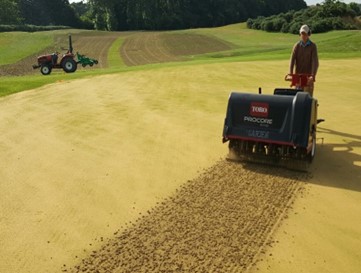
The work is expected to include:
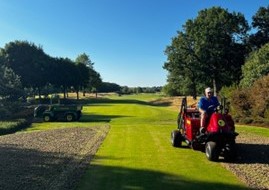
- Heavy sand topdressing
- Solid tine aeration
- Sand incorporation
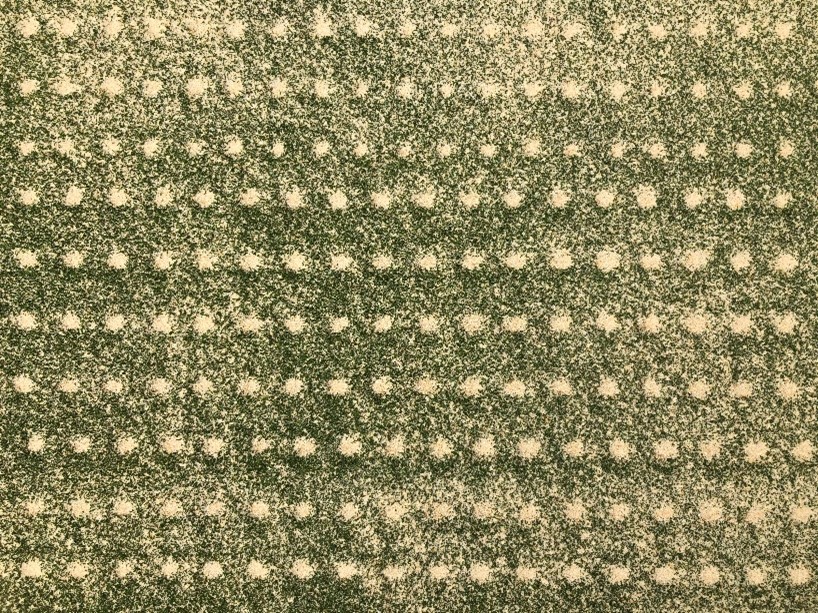
- Hollow core and/or Graden sand-fill aeration
- Topdressing
- Rolling
- Overseeding
The work will see the greens: drain better, become much firmer, develop deep rooting, replace any lost grass cover, increase smoothness/trueness once recovered, and crucially guarantee the pre-season strong resilient health of the grass plants as they emerge out of winter.
Recovery time is dependent upon air and soil temperatures and their effects on growth. We will do our very best to produce a short recovery time, but we can expect that to be some weeks given the time of year with mother nature firmly in charge. There’s always a decision to be made here and a choice between doing the work early for an early-season potential recovery or delay the work until growth is assured but taking us well into the spring playing season. I prefer the former because with a mild or even slightly cold spring, recovery has then happened prior to May and we can hit the ground running so to speak.
Finally, this program is our typical pre-season maintenance work reinstated and so not more intensive than would otherwise be. Thank you for your patience and understanding while we complete this very necessary work.
John Lockyer
Director of Greens