Recovering from Another Extraordinary Summer
Dear Members,
I wanted to update you on the current drought, how we’re repairing the courses, and what we’re doing to prepare The Wisley for increasingly extreme weather in the future.
At a Glance
- This is the worst drought and prolonged high temperatures in The Wisley’s history, with 49 consecutive days (and counting) without rain and widespread damage to fairways and roughs requiring active renovation rather than simply waiting for rainfall.
- Our limited water supply is being prioritised where it matters most – greens, tees, approaches and key playing areas – to ensure the best possible playing conditions while managing water responsibly.
- Recovery is already underway, with aeration, targeted irrigation, intensive overseeding and hundreds of additional labour hours planned over the coming weeks.
- We’re investing heavily to make the courses more resilient, including improved drainage, using TurfRad moisture monitoring technology, drought-tolerant grasses and a new borehole expected to increase irrigation capacity from 2027 (subject to approval).
- The courses will recover. Most areas should recover by this autumn, while the most severely affected sections will continue strengthening through winter and into next spring.
The past two summers have been anything but “Goldilocks”. Last year brought record-breaking heat and drought, and this year has been even more severe. Combined with the droughts of 2018 and 2022, we’ve now experienced four drought years in the last six.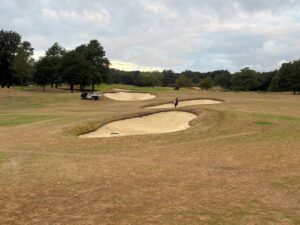
This summer’s “Super El Niño” weather pattern has produced exceptional heat and virtually no rainfall. As I write, we’ve gone 49 consecutive days so far without rain, making The Wisley the driest place in the UK and, remarkably, a national news story. It is unquestionably the worst drought in the Club’s history.
Large areas of fairways and rough have now suffered damage beyond what nature can recover unaided. These areas will require extensive renovation, overseeding and ongoing recovery work rather than simply waiting for rain. There has been one positive. The firm, fast conditions have produced the type of running golf many Members enjoy, with noticeably more distance from the tee. These are the playing characteristics we strive for each summer—just ideally without the accompanying turf damage.
Why is everything so brown?
Very few golf courses in the UK have enough water to irrigate every hectare of turf throughout an extended drought. Irrigation is designed to supplement rainfall, not replace months without it, and today’s weather patterns are far more extreme than irrigation systems were originally designed to manage.
The Wisley is currently limited by its permitted abstraction licence volume, and unlike most golf courses, we do not rely on mains drinking water for irrigation. During prolonged drought we therefore have prioritise greens, tees, approaches and key playing areas to make the water last. Unfortunately, there simply isn’t enough water available to maintain full healthy grass cover across every fairway and rough.
You may also notice that some areas of the courses have coped much better than others. Small differences in soil depth, grass species, shade, wind exposure, traffic and irrigation coverage all influence how turf survives prolonged dry weather, so neighbouring fairways can withstand drought and then recover very differently.
Why are we installing drainage during a drought?
Although it seems counterintuitive, the fairway sand slitting programme remains one of the most important projects we undertake. The work dramatically improves winter drainage, increases winter playability, reduces closures and helps drought recovery by allowing future rainfall to move more quickly into dry soils. Summer provides ideal construction conditions, allowing us to complete work that would be impossible during winter and recover relatively quickly from it because of strong growth. It doesn’t add damage to the courses; the lack of rain did that.
The Recovery Plan
Our recent maintenance weeks in July have already provided an excellent start. Greens, tees, approaches and fairways have all been aerated and sanded to help irrigation and future rainfall penetrate the dry, water-repellent soils.
To accelerate recovery further, the first three August maintenance closures will each extend to two days. During this period we will:
- Overseed approximately 10 tonnes of drought-tolerant grass seed.
- Aerate and renovate drought-damaged fairways and roughs.
- Continue highly targeted irrigation.
- Commit hundreds of additional labour hours to recovery.
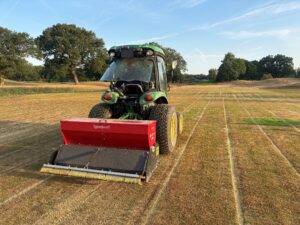
Recovery is not simply a case of waiting for rain. Significant rainfall will help to start recovery, but we shouldn’t wait until it falls to begin the recovery work or we’ll waste value time and progress. We’re setting the scene now for a quick recovery by doing this work to get everything we need into the ground. Specialist machinery, carefully timed treatments, substantial quantities of seed and fertiliser, and many hundreds of additional staff hours are all required to restore the courses as quickly as possible.
Building Greater Resilience
Whether driven by climate change or natural weather cycles, the pattern is becoming increasingly clear – hotter, drier summers and wetter winters.
Our long-term strategy is therefore centred on improving how we manage water at both extremes. Every extreme season teaches us more about how the courses respond, and those lessons are directly shaping future investment.
Key projects include:
- Continuing fairway sand-slitting to improve winter drainage.
- Expanding irrigation infrastructure in preparation for the new borehole.
- Using new technologies such as TurfRad to map soil moisture across every fairway each morning, allowing water to be applied only where genuinely needed. In its first summer alone it has improved irrigation efficiency by approximately 25%.
- Introducing deeper-rooting bent, rye and fescue grasses through concentrated overseeding to improve drought resilience over time.
The biggest step forward will be the new borehole. Subject to final Environment Agency approval, it is expected to come online for the 2027 season and will provide a substantial increase in irrigation capacity. While it won’t create Augusta-like conditions during extreme droughts, it should dramatically reduce drought damage and deliver more consistent summer playing conditions for the fairways in particular.
What happens next?
Recovery will remain slow until temperatures reduce and meaningful rainfall returns. Members should see steady improvement through the autumn as fairways regain density and colour. The playing roughs have been affected most severely and require complete reseeding, with recovery continuing through winter and into next spring. Our goal is to limit damage to this year and not let it affect next year’s playing season.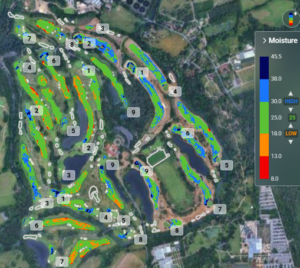
Final Thoughts
This summer has tested the courses more than at any point in The Wisley’s history, but we have a proven recovery plan and a clear long-term strategy to make them increasingly resilient.
We cannot control the weather, but every investment we make, from smarter irrigation management and improved drainage to new grass varieties and increased water resources, helps reduce the impact of future droughts and wet winters.
I would like to mention and thank the greenkeeping team, whose commitment and hard work throughout this exceptionally challenging summer have been outstanding. Their efforts, combined with continued investment in the courses, will ensure The Wisley recovers strongly and is even better prepared for future extremes.
Thank you, as always, to our Members for your continued understanding and support. It is especially appreciated in a year as challenging as this.

Kind regards,
John Lockyer
Director of Greens