Dear Members,
We are roughly halfway through the re-planting of the driveway after the new road was installed last year. The road moved to accommodate the new putting green and in doing so we had to sacrifice a medium-sized landscape natural area.
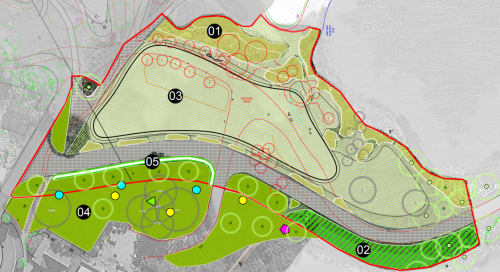
As part of the planning application, we were required to use expert ecologists who calculated the loss of habitat here and designed a landscape plan to replace it and increase its size (called a “biodiversity net gain” or BNG assessment). Our landscape restoration plan was approved by the council and so we’re now following through on its recommendations.
In brief, the plan includes the following elements or habitats: introduced scrub, lowland meadows, modified grassland (the green), native hedgerows and new trees/woodland. It’s a mixture of ecology areas to maximise habitat creation for a wide range of flora and fauna to develop and live. All the species selected in each area are native to the UK and I include them below in case you’d like to know the details.
- Hedgerows: hawthorn, blackthorn, cherry, alder, dogwood, hornbeam, hazel, dog rose, beech, sweet briar rose, and crab-apple
- Trees/wooded areas: Oak, hornbeam, birch, elm, lime, beech, and hazel
- Scrub: heathers, English lavender, rosemary, thyme, holly, ivy, yew, and honeysuckle
- Lowland meadows/wildflower
Our progress so far has seen the twenty-seven replacement trees planted on the banked area behind the clubhouse service yard. The native hedgerow installation is underway along the road’s curve by Mill 9 lake, and in front of the large laurel bushes further towards the car park. It will be grown to 60cm or 2feet high so kept low to avoid losing any important views (the plastic protective covers removed in June). Next up in March/April will be wildflower planting to in-fill between the new trees to create the lowland meadow habitat. Native scrub will be added then too but very much in the background of the scheme. Finally, the new green will be built starting in mid-March and reaching completion in early May, and the last area planted in this approved scheme to its surrounds.
We’ve tried to strike a balance between achieving the habitat replacement for biodiversity gain, presenting the new area to be visually appealing, but not to the detriment of the wider golf course views. We do expect to tweak certain elements as the new plantings mature and as part of our ongoing management.
John Lockyer
Director of Greens